In large-scale airport projects, complexity is not a potential risk, it is an inherent reality. Without adapting the management of the project accordingly to this fact, yourstandard communication and decision patterns simply stop working.
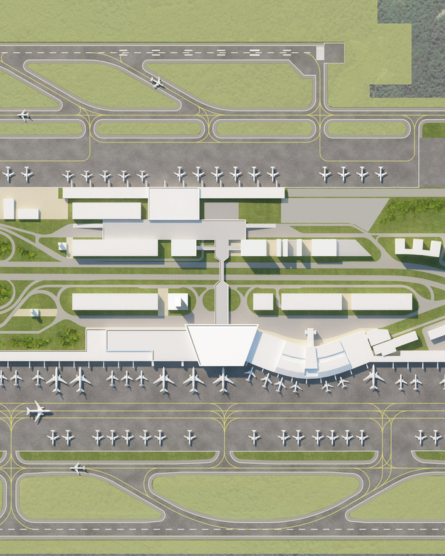
Here’s why: A normal building project might have a handful of key stakeholders and a manageable list of open topics. A large airport terminal project easily involves 80+ people, sometimes even spread across multiple countries and time zones, working through hundreds of interdependent topics in parallel.
The result: an environment of permanent overload
Everyone is drowning in meetings, everyone is missing context on decisions made in a parallel workstream, and communication that would work perfectly fine on a normal project simply doesn’t work anymore at this scale.
Nowhere does this show up more painfully than when it’s time to prepare and present a decision. I’ve watched brilliant technical teams walk into a steering committee with months of excellent analysis – and lose the room in the first five slides, because the story got buried under the complexity of the topic.
So what actually helps? Here are some of my own hard learnings from 20 years in airport projects:
Treat the project like a film or an expedition
A film project never just starts working, it starts with a script phase. Sketch your next planning phase as a storyline on paper: What’s the problem? Why does it matter now? What are the real alternatives? Where are our decision points. At which of these points do we need to involve third parties?
Sketch important presentations as pictures first, not bullet points.
Storyboards force clarity. If you can’t sketch the core message of your next steps as a simple image, it’s probably not clear enough yet. I’ve seen a 100-million-euro MEP project get rejected on a first attempt with highly competent but over-technical slides – and get approved two weeks later with 15 slides built around a story.
Rehearse it.
Important decisions deserve a dress rehearsal – not a quick read-through, an actual simulation of the toughest questions the room will ask. Where’s the weak point in the logic? Who will push back, and why? This is where gaps get closed before they cost you the meeting.
Organise informal social events and celebrate achievements
One thing I’ve seen work reliably across very different projects: regular social events and deliberately celebrating intermediate milestones. It sounds almost too simple for a problem this complex – but a shared lunch, a small celebration when a difficult decision finally gets made, or just marking the end of a tough project phase together, rebuilds exactly the kind of informal communication channels that get lost in project overload.
None of this is about dumbing technical content down. It’s about accepting that in complex projects, communication doesn’t happen automatically just because the technical work is solid. The communication and decision process has to be “designed” with as much focus as the whole building itself. What’s your experience – have you seen complexity quietly break down communication on your projects, and what helped you get it back under control?